Bernina Express: a simple day trip into the Swiss Alps
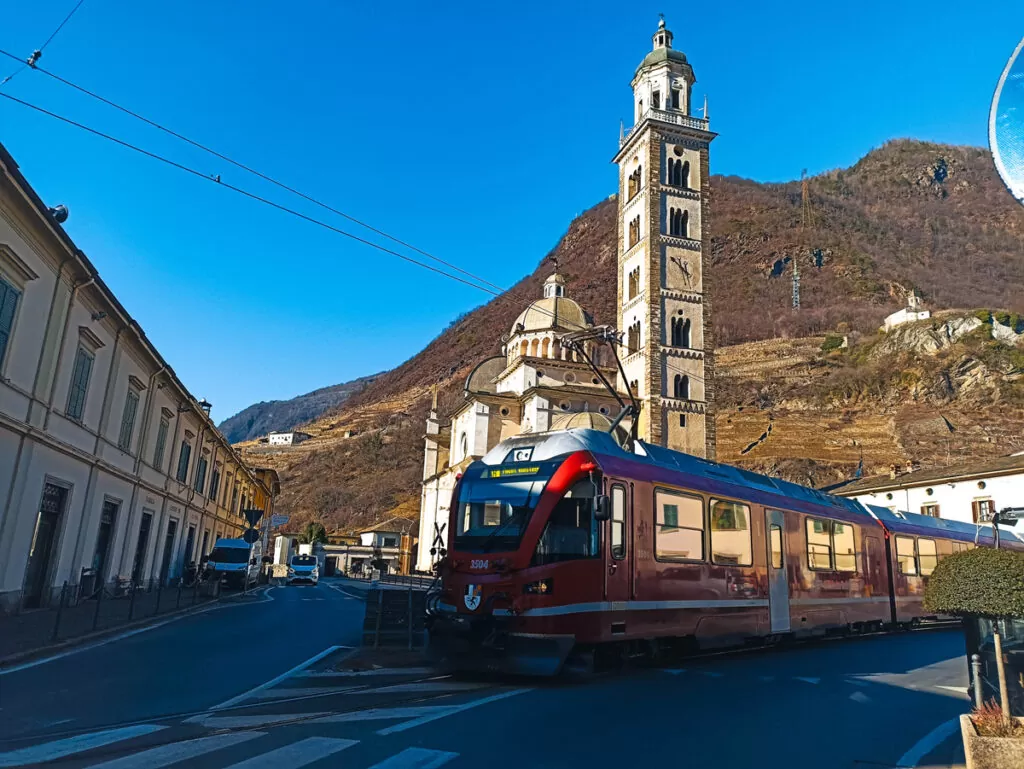
The Bernina Express is a bright red panoramic train that runs between Tirano in Italy and the Swiss mountain town of St Moritz. It is known for its dramatic alpine scenery: white peaks, glaciers, small villages and wide open valleys. The route climbs to more than 2200 metres and crosses tunnels, curves and historic stone viaducts that make the whole trip feel special, even if you’ve never travelled in the Alps before.
Key facts
- Journey time: about 4 hours from Chur to Tirano
- Distance: 122 km
- Highest point: 2253 m
- Tunnels: 55
- Bridges and viaducts: 196
- Stops: 25
How to get to the starting point
You can reach the route easily from nearby countries:
- From Italy, take a regional train from Milan or Lecco to Tirano.
- From Switzerland, travel from Zurich to Chur and start the route from the northern end.
- From Austria, travel to Sargans, then continue to Chur.
- From France or Germany, reach Zurich or Karlsruhe, then continue to Chur.
When to go
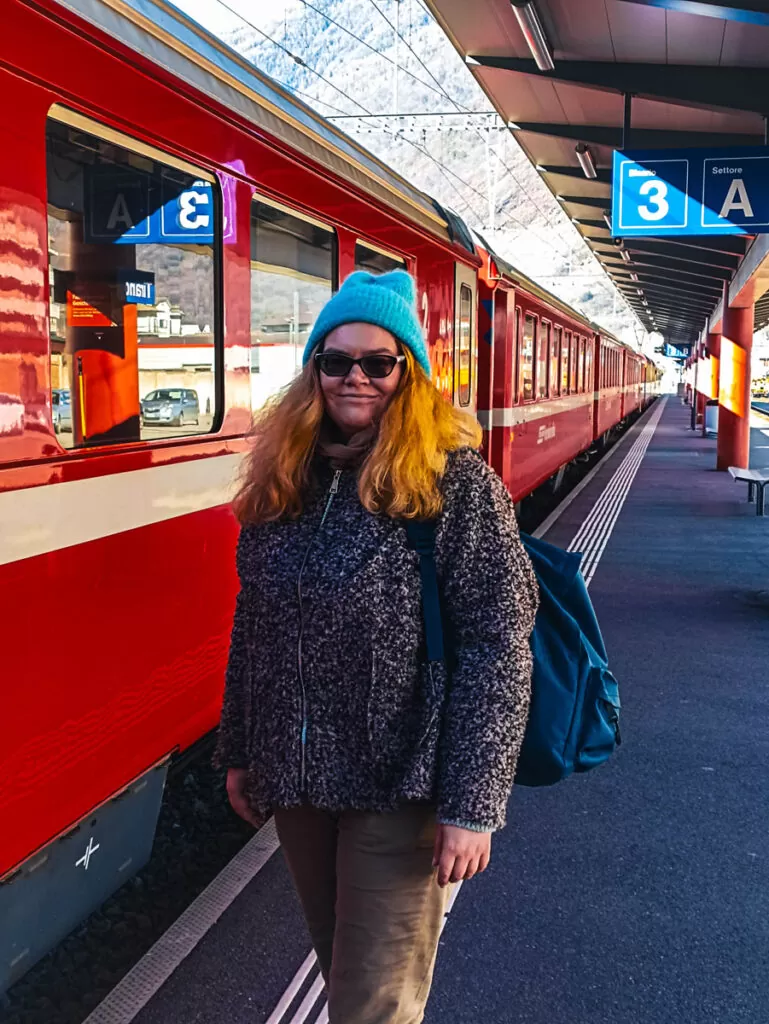
The Bernina Express runs all year. In spring and summer you see green fields, deep-blue lakes and colourful villages. In winter the views feel completely different: snowy slopes, frozen lakes and quiet, empty forests. Both seasons are worth it. It depends whether you prefer bright summer colours or the calm, white winter landscape.
A simple day trip from Italy
If you are staying near Lake Como, Milan or northern Italy, it’s easy to visit the Swiss Alps as a day trip. Travelling from Lecco is especially convenient because the journey to Tirano is direct.
Here is one example of a simple day plan:
- Lecco → Tirano at 08:02
- Bernina Express Tirano → St Moritz at 11:00
- St Moritz → Tirano at 15:48 or 16:48
- Tirano → Lecco at 19:08 or 20:08
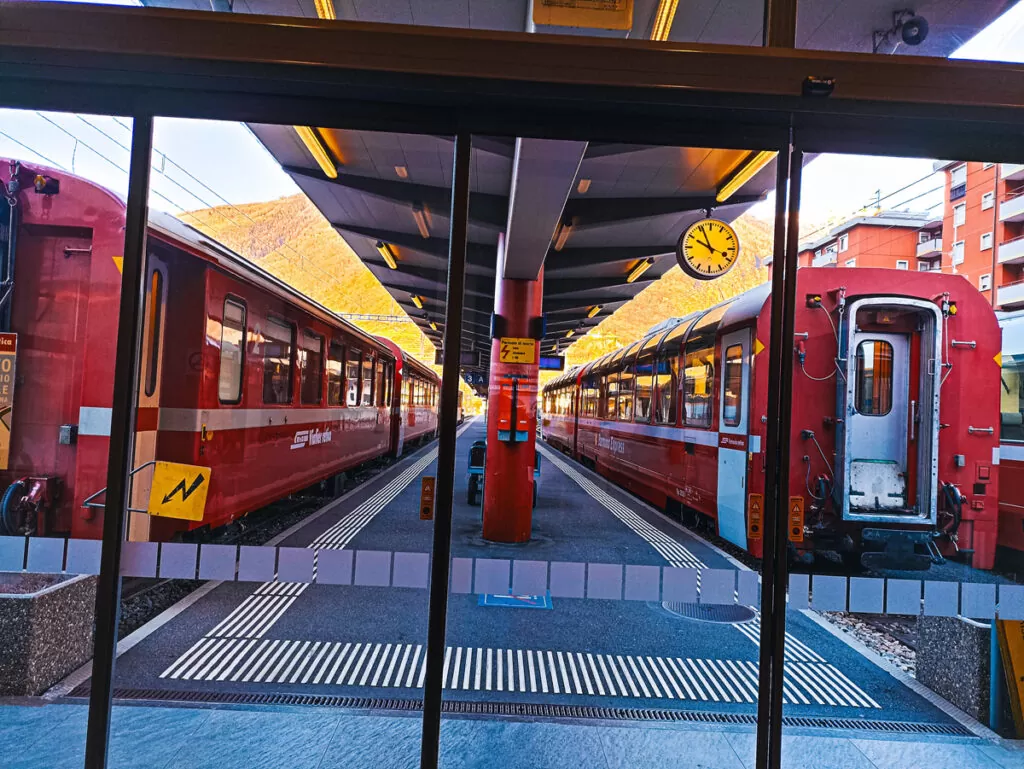
You can also start from Chur, but beginning in Tirano keeps things easier if you’re already in Italy.
What the journey feels like
We took the early train from Lecco to Tirano (tickets were about €9.60). After arriving, we bought our Bernina Express tickets at the counter. A return ticket cost around €66, plus a small extra fee for a panoramic carriage. We chose the panoramic carriage only on the way up, which was enough because winter days are short and it gets dark early.
Seat numbers are fixed in the panoramic carriage, so finding your place can feel confusing the first time. In our case the carriage number was shown on a screen inside, not on the outside. But once you sit down and the train starts climbing, everything becomes simple.
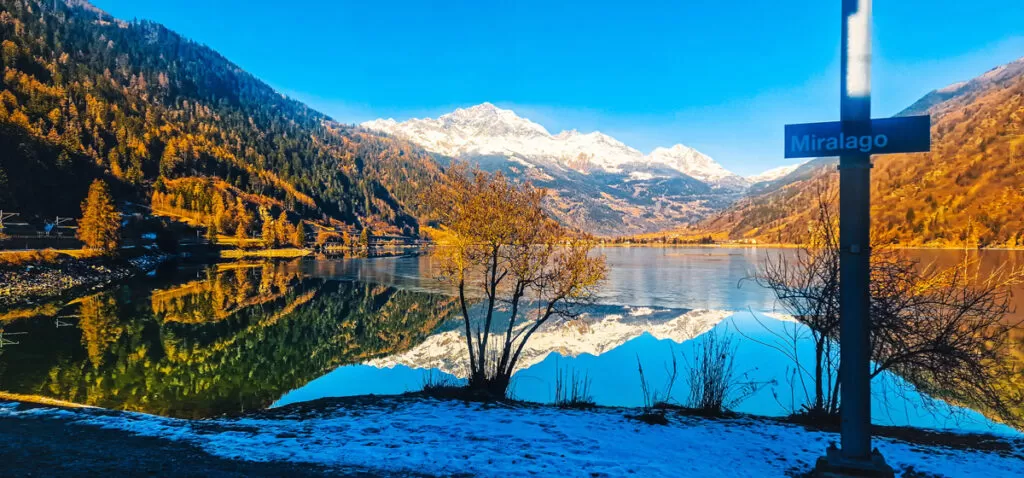
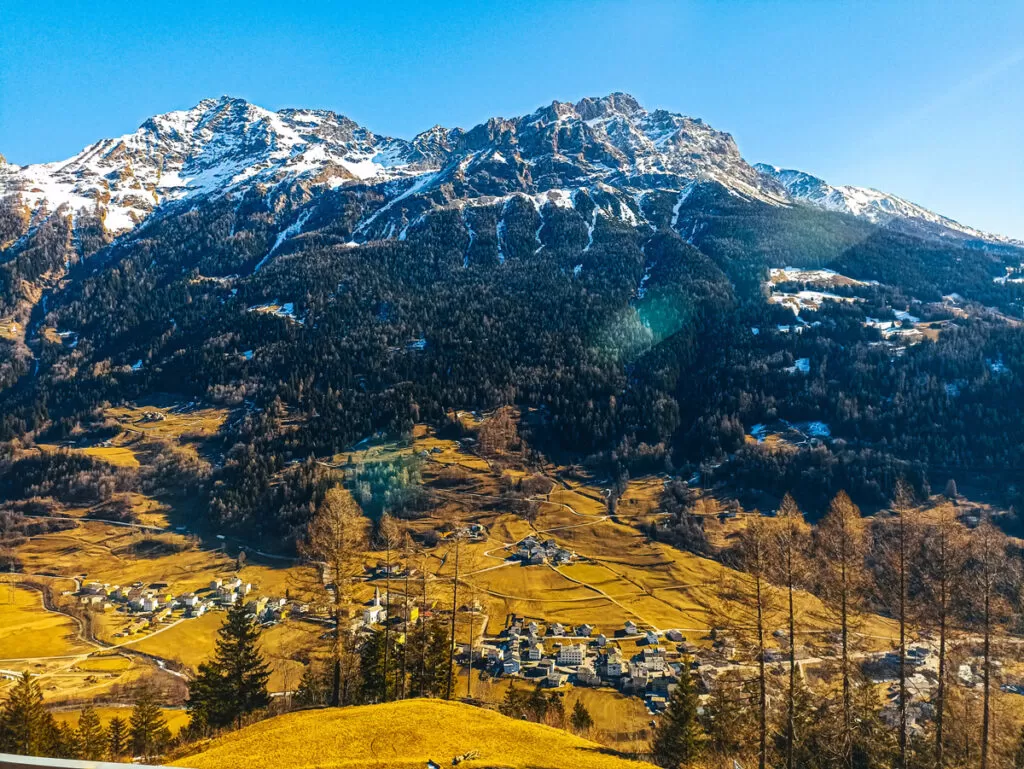
The landscape changes fast. First you see green fields and villages. Then, as the train climbs higher, snow appears. Soon you reach open valleys, bright white peaks and a lake that reflects the mountains on sunny days. If you want photos without window reflections, you can step into the small area between carriages and open a narrow window there.
The highest point on the route is Ospizio Bernina, next to the pale-blue Lago Bianco. In summer the water reflects the mountains. In winter the lake freezes completely and turns into a flat white field of snow.
A few hours in St Moritz
Once the train arrives in St Moritz, many travellers walk straight to the lake. When we visited in winter, the lake was completely frozen and safe to walk on. People were skating, sledging and even riding in a horse-drawn carriage across the ice.
We walked one direction along the shore and returned across the lake. Then we headed into town. Our host in Lecco had recommended the Hanselmann bakery, which sits in the centre. Reaching it required a short but steep walk uphill, but the cakes and chocolates looked lovely. We also stepped inside a small church that had a modern art exhibition.
On the way back we finally understood why locals were taking a different route. They were using an escalator hidden next to the bridge that we had ignored earlier. It would have saved us some climbing, but at least we found it on our return.
We took a regular carriage back to Tirano, which is more than enough in winter because darkness falls early and the panoramic windows stop being useful.
Practical tips
- In winter, take the earliest possible train from Italy. Days are short and views disappear quickly.
- Sit on the left side when travelling from Tirano to St Moritz or Chur. On the way back, choose the right side.
- You can get off at any village and continue later on a regional train.
- If you want to save money, choose the panoramic carriage in only one direction.
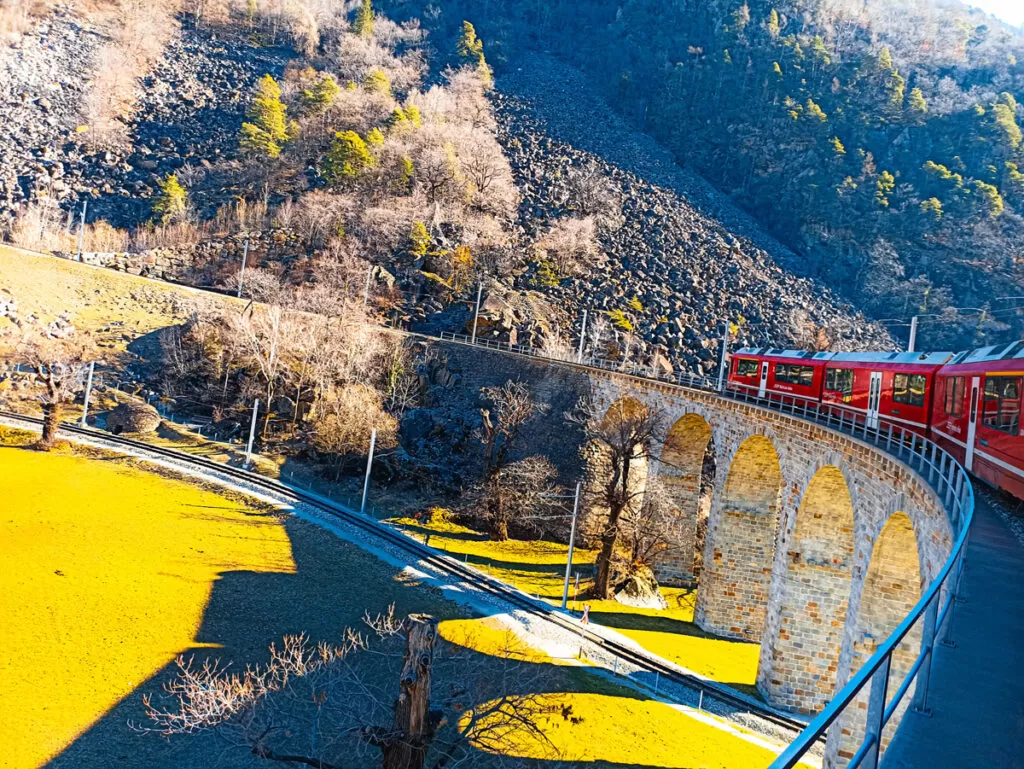
Prefer a guided trip instead of organising everything?
If you like the idea of the Bernina Express but don’t want to plan the timetable, change trains or worry about seat reservations, you can also join a guided trip. Most tours start in Milan, but there are options from Como, Tirano and even St Moritz. They usually include the bus transfer to or from the Alps and the Bernina Express train ride in one package. It’s an easy option if you want everything sorted for you, especially in winter when the days are short and connections matter a bit more.
Final thought
The Bernina Express is one of the easiest ways to experience the Swiss Alps without complicated planning. It’s simple, scenic and perfect even for beginners or anyone who wants a calm full-day adventure. If you’re staying in northern Italy, it fits naturally into your trip without rushing. And whether you organise it yourself or take a guided tour, the views alone make the whole day worth it.
Read more trip ideas and easy experiences
- 5 best cities in Europe for a first-time traveller
- 4 days in Liguria: an easy coastal trip
- What to do in Rapallo
- Day trips from Peschiera del Garda
Save for later:
